Hearing protection for hospitality and events
Behind the bar, on the dance floor or next to the stage, you spend hours in amplified music. Custom earplugs with a DM filter reduce the volume without making the music sound dull. You can still understand orders, guests and the radio. With your logo, for the whole team.
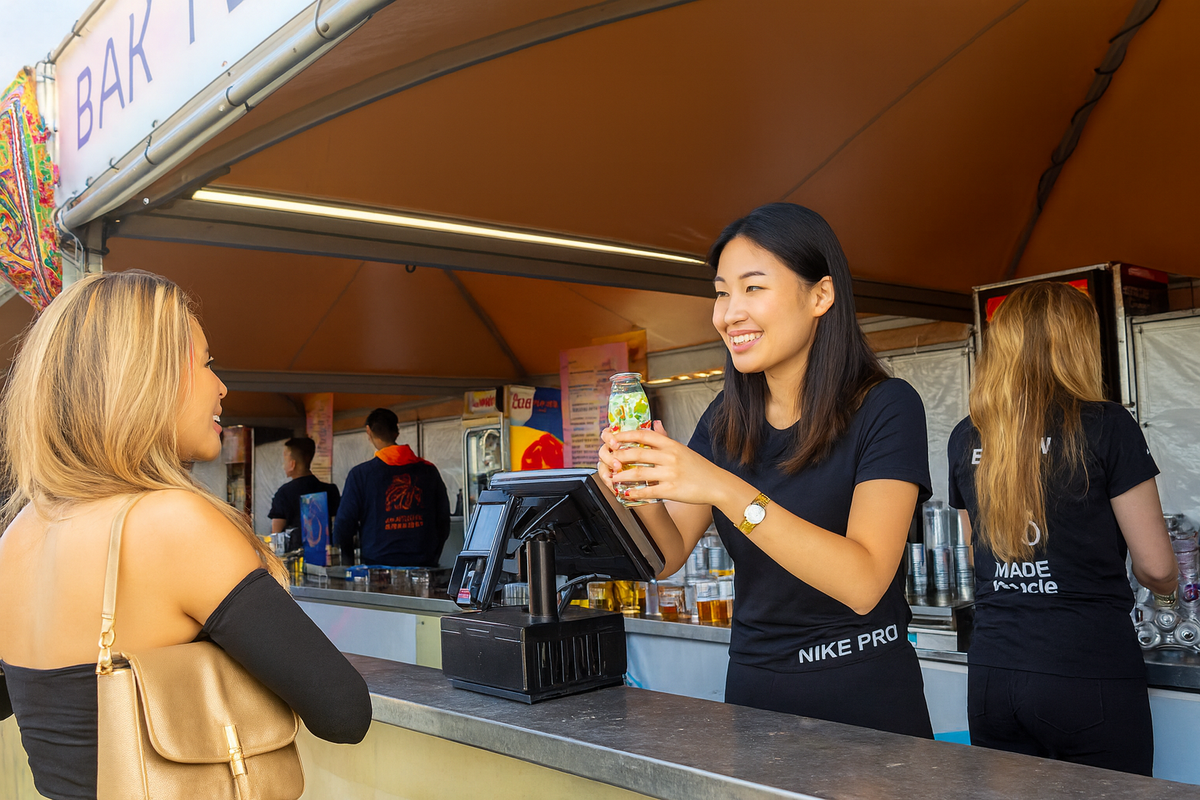
How loud is it during a night out or a festival?
With amplified music, the level is far above what the Working Conditions Act allows as a daily dose without protection. Staff are also in it for the whole shift, not for a few hours like the visitors.
Typical noise sources
-
Music event, averaged over 15 minutesUpper limit under the fourth covenant on preventing hearing damagemax. 103 dB(A)
-
Dance floor in a nightclub"Quite normal" according to the performing arts sector catalogue (2006)≈ 100 dB(A)
-
Café, restaurant or venue with musicThe Labour Authority names hospitality venues as places with daily doses above 80 dB(A)> 80 dB(A)
-
Kitchen, dishwasher and extractionThe level varies widely per venue. A measurement gives a clear answerMeasure
What you need to keep hearing
-
↔
Orders and guestsAt the bar and at the table, without having to lean over the counter.
-
☎
Radio and colleaguesTechnicians, security and the manager need to be able to reach each other quickly.
-
!
Trouble and evacuationSecurity staff want to hear trouble coming. Everyone must be able to understand an evacuation instruction.
-
♪
The music itselfFor technicians and artists, the balance in the sound must stay audible, just quieter.
Based on RIVM, progress report on the fourth covenant (2025), Branchecatalogus Podiumkunsten, versterkt geluid (2006) and Nederlandse Arbeidsinspectie, Werkinstructie blootstelling aan geluid (2025), all in Dutch. The threshold values are on Arboportaal, the Dutch government's website on working conditions.
How to arrange hearing protection in hospitality properly
In hospitality, music is the product. So hearing protection must not make the work sound worse. But it does need to make sure you still hear well after ten years behind the bar.
Is hearing protection mandatory in hospitality?
Yes. As soon as an employee is exposed to an average of 85 dB(A) or more per working day, they must wear hearing protection. That is set out in article 6.8 of the Dutch Working Conditions Decree (Arbobesluit). Above 80 dB(A), the employer must already provide suitable, properly fitted hearing protectors. And even with hearing protection in, exposure may never exceed the limit value of 87 dB(A).
There is no special law for noise in hospitality. According to Koninklijke Horeca Nederland, the general occupational health and safety rules apply, and as an employer you must make sure that employees actually wear their hearing protection. Daily exposure is the average over an 8-hour working day. A bartender who spends a whole evening in music at around 100 dB(A) goes far above that.
In addition, the parties to the fourth covenant on preventing hearing damage from amplified music, including Koninklijke Horeca Nederland, have agreed that employees in spaces with amplified music wear hearing protection with a music filter. That is not a law, but an agreement within the sector.
The 103 dB standard protects visitors, the Working Conditions Act protects staff
The fourth covenant on preventing hearing damage from amplified music (2023 to 2027) sets the limit at an average of 103 dB(A) per quarter of an hour. Koninklijke Horeca Nederland, the Dutch hospitality association, is one of the parties. According to the RIVM, the covenant covers both visitors and employees at music events.
For employees, the Working Conditions Act also applies. It works with the daily dose over 8 hours instead of a quarter of an hour. So a venue that keeps to 103 dB(A) can still exceed the limits of the Working Conditions Act for its staff.
Why a DM filter
Ordinary earplugs attenuate unevenly. They attenuate too little in the low frequencies and too much where it is not needed. Music and speech then sound dull. The DM filter from Dynamic Ear Company attenuates more evenly. The sound gets quieter and the tone stays. The filter is also intended for musicians and sound engineers. The DM series ranges from 10 to 20 dB SNR. Anyone standing close to the speakers needs more attenuation than someone working at the back of the venue. The filter is interchangeable.
For artists, DJs and sound engineers, there is more information in hearing protection for musicians, drummers and DJs.
Getting them worn is the real challenge
Hospitality staff only wear hearing protection if they can still be welcoming. Custom earplugs are small and barely noticeable, or deliberately visible in the venue's colour. They stay comfortable for the whole shift, even if you talk or walk a lot. Fixed custom earplugs go in and out faster than a foam earplug that you first have to roll in. That helps when you speak to a guest in between.
There are more practical tips in how to make sure employees actually wear their hearing protection.
With your logo, for staff and regular crew
For clubs, music venues and festivals, custom earplugs with your own logo (from 10 pairs) are a recognisable part of the work kit. Bar staff, security, stage technicians and artists then wear the same protection in the colour of the event. That also makes it easy to see who has their hearing protection in.
Sources
- RIVM, Voortgangsrapportage vierde convenant preventie gehoorschade versterkte muziek (2025) (in Dutch)
- Koninklijke Horeca Nederland, Zijn mijn medewerkers verplicht gehoorbescherming te dragen? (in Dutch)
- Branchecatalogus Podiumkunsten, Versterkt geluid (2006) (in Dutch)
- Nederlandse Arbeidsinspectie, Werkinstructie blootstelling aan geluid (2025) (in Dutch)
- Arboportaal, wat zegt de wet over geluid (in Dutch)
- Arbeidsomstandighedenbesluit, artikel 6.8 (wetten.overheid.nl) (in Dutch)
- Vierde Convenant Preventie Gehoorschade versterkte muziek (2023) (in Dutch)
Hearing protection checklist for the workplace
Six sections with checklist items on three A4 pages, from noise measurement and RI&E to information and the hearing test. Each item shows the article from the Working Conditions Decree or the Working Conditions Act, and the last page has an action list. The checklist is in Dutch.

From a single venue to a whole festival team
We plan ear impressions outside the busy hours.
Who works where?
For the bar, the floor, technical crew or security, we choose the strength of the DM filter per job.
Logo and colour
Send us your logo. You first get a proof for approval.
On-site fitting
From 10 employees, we come to you, before opening time or on a production day, at your venue or on the site.
On siteReady about three weeks later
Everyone gets their own custom earplugs with a case, recognisable in the colour of the venue or the festival.
Custom earplugs for hospitality and events


Questions from hospitality and events
Can I still hear orders with custom earplugs in?
Yes. A DM filter attenuates high and low frequencies by about the same amount. Speech gets quieter but stays intelligible.
Does the 103 dB standard also apply to my staff?
The fourth covenant covers visitors and employees at music events. For staff, the Working Conditions Act with its daily dose over 8 hours also applies. Anyone who spends a whole shift in music needs hearing protection, even if the venue keeps to 103 dB(A).
How much attenuation is enough for bar staff?
That depends on the level and the length of the shift, so start with a measurement. Technicians and security staff close to the speakers usually need more attenuation than bar staff. The filter is interchangeable.
Can we have custom earplugs made with our festival logo?
Yes. Festivals, clubs and music venues can order custom earplugs with their own logo and in their own colour from 10 pairs, for staff, artists and regular crew.
What if someone loses their custom earplugs after a busy night?
In an eye-catching colour with a logo, they are found sooner. If they are gone anyway, we arrange a replacement quickly.